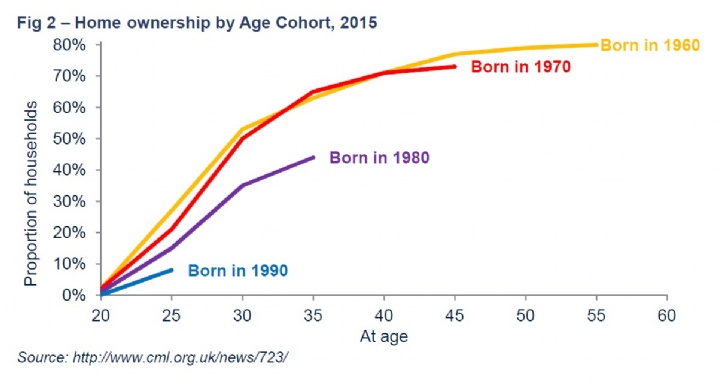
There is no housing crisis for many of the 7.4million households who own their home outright. Even for those fortunate enough to buy with a mortgage, housing costs are in line with historic trends. Meanwhile households living in the rented sectors are heavily dependent on state assistance and/or living with multiple earners to bring affordability near to manageable levels.
The reality, as a Government Office for Science report* highlighted, is that the housing market is a complex and interconnected system (both within and with other parts of our economy and society). Targeting just one or two components of the housing market and its drivers, as per current policy, may help increase housing delivery in the short term. However it will leave other components and (more importantly) people unchanged or even worse off than their current situation.
Many of the measures announced in the Government’s productivity plan ‘Fixing the foundations’ will help increase the delivery of new private housing. Some of them, such as intervening in local plans, could ensure more housing is delivered in the markets that need it most. The success of policies targeting brownfield land will however be dependent on its location, capacity and viability.
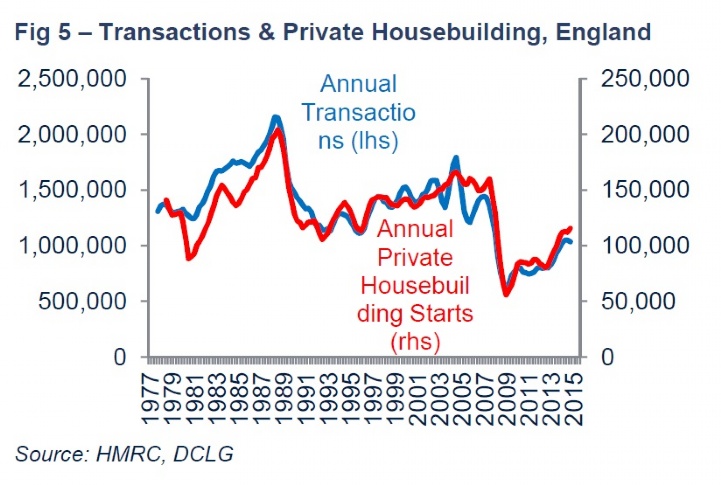
The key test will be whether the measures encourage greater competition in the land market. Few landowners or developers would intentionally set out to sell or build at a price below market value. Therefore increased competition that brings forward more land and at least stabilises land values would be a positive outcome. It may even help break the under-researched (and over used by me?) 10-1 ratio between overall market transactions and private housebuilding (Fig 5).
The housing market crisis is closely interlinked with our low inflation, high debt economy. Even with higher supply, house prices are likely to remain high relative to incomes and so deposit requirements will as well (Fig 6). The greater availability of higher loan-to-value mortgages could help but there is a clear tension between the desire of Government to increase home-ownership and the need for the Bank of England to minimise future risks. Under these circumstances, some policies will inevitably help more buyers into the market but owner-occupation will primarily remain accessible to only the richest in terms of both income and wealth.
Meanwhile we should at the very least avoid worsening the housing crisis for those in other tenures and try to do all we can to improve it for them. After all, many of those struggling with affordability in the rented sectors could be future home owners if we gave them a chance.



.png)