Research article

Approaching peak loneliness?

The rise in one-person households

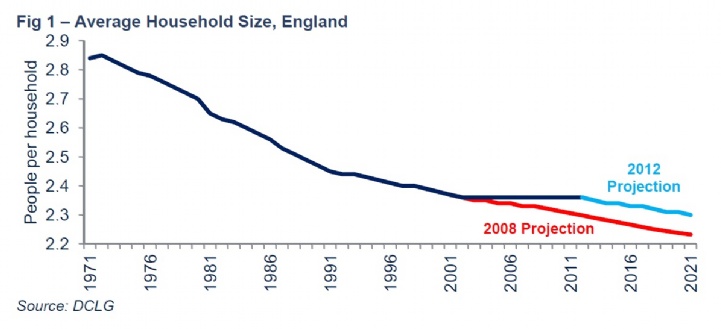
The average household size declined throughout the 20th century, falling from 4.3 people in 1911 to 2.4 people in 2001. The decline had been expected to continue but the 2011 Census surprised many when it showed that the average household size had barely changed in the intervening ten years. Recent projections for future household formation indicate a continued decline in size over coming years.


Average Household Size England

The decline in average household size is mathematically a result of a proportional (and numerical) increase in the number of one and two person households. The increased availability of housing during the 20th century, changing lifestyles and support from the state have enabled growing numbers of people to live in smaller household sizes. People delaying having children, more women entering the workforce, increased rates of divorce, and longer life expectancy together with NHS and social care have all played a role in the increased number and proportion of one and two person households.

The number of two person households has grown strongly and followed a linear trend over the last 60 years. They have consistently made up around one third of the total for the last 30 years. Meanwhile, the growth in one person households has followed more of an exponential trend in terms of total numbers. They had been expected to continue this trend and make up 35% of households by 2011 but instead only maintained their share of total households between 2001 and 2011. The key question looking ahead is whether this reflects an optimum proportion of one person households given peoples’ preferences (a peak in loneliness), or is the result of constraints imposed by an unaffordable housing market?

Number of people per household England and Wales

Charts

The reality is that we are probably unable to answer the question definitively without some substantial primary research. My budget doesn’t stretch to that but we can learn quite a lot from looking at the demographics of and trends in one person households from published data sources.

One person households England and Wales

There are some difficulties making direct comparisons between census years given differing age categories but the data appears to point to a slowly increasing number of pensioner aged households and much larger increases in the number of younger one person households over the last 40 years.

Number of one person households by age UK

The increase in one person households post 2001 was much slower than during the previous decade. Annual data from the Labour Force Survey shows the divergence in trend between those aged 25-44 and those aged 45- 64 after 2002. This was the same time that affordability pressures began to bite and first time buyer numbers fell.

Age and sex of one person households England and Wales 2011

One person households are split relatively equally between men and women with 3.3m and 3.8m people respectively. However the gender split is greater when the group is divided by age. 58% of one person households aged under 65 are men while 69% of those aged 65+ are women.

Marital status of one person households by age and sex England and Wales 2011

The marital status and gender split are related with 50% of older one person households widowed women. Divorce also plays a part in the formation of one person households, accounting for 24% of all households. Single (never married) households are the largest category with 38% of one person households and their motivations for living alone remain relatively opaque.

2011 One person households

Probably a bit of both

The simple trend analysis suggests that there was a combination of factors that contributed to lower proportions of one person households than expected. These factors appear to include reaching an optimum proportion of older one person households but also an incresingly unaffordable housing market limiting the ability of younger people to live alone. The exact split between these and other factors is difficult to determine and there will be some interdependency. For example, divorce numbers have been highly correlated with transactions in the housing market over the last 15 years.

The largest decline in the proportion of one person households is in London, the most unaffordable of housing markets. This suggests that affordability pressures are probably the most important factor in lower proportions of one person households. If we have reached peak loneliness then it is more likely either a false summit or plateau created by the existing housing crisis. If housing affordability were to ease then further larger increases in the number and proportion of one person households could be expected.

Looking ahead it is essential for us to gain a greater understanding of the motivations for why one person households form and what has been preventing them from doing so. This will help to create more accurate forecasts for housing need and ensure that we are building the right mix of homes in the right locations.

It is important to note that an increase (actual or projected) in the number of one person households does not necessarily translate directly into a need to build more one bedroom homes. Some “new” one person households will be widowed people under-occupying the family home (who have historically resisted such a drastic downsizer move), others will be separated or divorced people who need a spare room for their children or home office. Younger people that might previously have bought a one bedroom home as a quick and easy step onto and up the housing ladder might be put off by the longer term commitment that now involves and so save for a two bedrooms instead. I will be investigating these and other related issues in future notes.

Average bedrooms by tenure
Bedrooms and tenure of one person households
Percentage share of one person households as per cent of all households
Percentage point change in share of one person households


Other articles within this publication

23 other article(s) in this publication