
While they are scouring the data for clues as to which policies resonate with the electorate, in the Savills research department we are looking at how short term sentiment in the housing market sits alongside longer term economic drivers. While they are looking at whether and how different sectors of society are likely to vote, we are looking at which locations and sectors of the market are on the up or falling out of favour.
For some time now, it has been apparent that the world of politics and housing have been on a collision course. Whether it be the coalition’s pre-emptive strike in reforming stamp duty, or the opposition’s controversial policy for a mansion tax, the taxation of high value homes has been under the political microscope.
So where there is political uncertainty, it is to be expected that there is also a prevailing sense of caution in the prime housing market. For the moment, short term sentiment outweighs economic fundamentals.
As we explain in our lead article on page 4, the medium term outlook for the prime markets beyond London is much brighter than current market conditions would indicate. A mansion tax is no certainty, unless we get a Labour majority government. Even if such a tax were to be introduced, we are forecasting that prime prices will be higher in five years time than they are now, reflecting the fact that much of the prime market beyond London sits below the £2m threshold.
In the event that such wealth taxes are avoided, we are forecasting a significant rise in the number of £1m+ sales beyond London, as the economy improves and buyers exploit the price gap between the capital and its hinterland, and between the commuter zone and beyond.
Key Drivers
In assessing the market we have looked at a combination of recent trends, long established drivers of demand and the distinction between needs based and discretionary purchases.
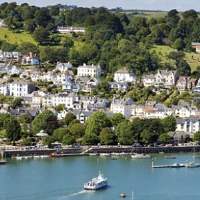
We have explored the rise of prime urban markets in locations such as Bath, Cambridge, Oxford, Sevenoaks, St Albans, York and Edinburgh, examined the relationship between good schools and house prices and looked at the prospects for prime coastal markets.
This gives us a clearer picture of the drivers and trends that will shape the prime regional markets over the next five years, even if the political landscape against which they operate remains an uncertainty.
.jpg)



.jpg)